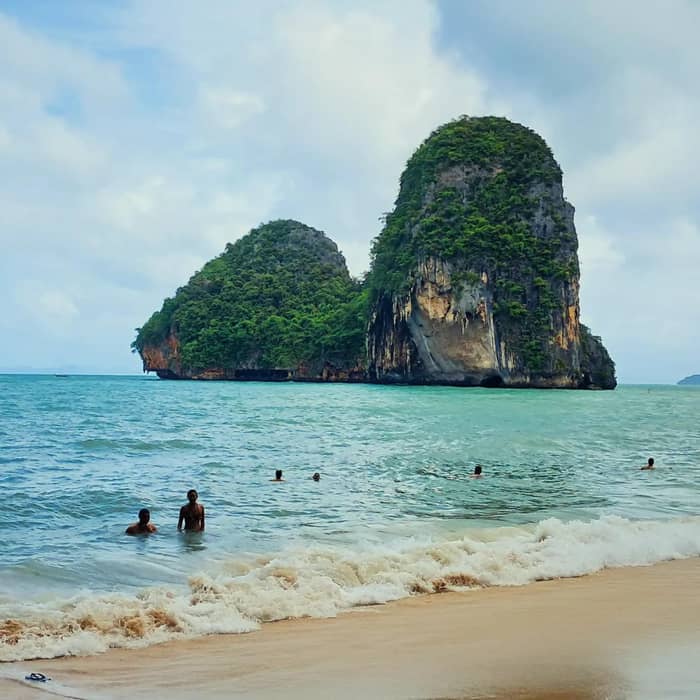
Gear provided
The site day
Longtail with lunch
- Length6 hours
- SnorkelChicken Island
- GearProvided
- From$31
Clickable checklist
4 Islands day trip by longtail boat from Krabi
★ 4.6 · Rated by 5,923 guests
Your list · 11 items
Tick each item when it is done. Your place is saved on this device.
0 / 11 ready
All ticked. Only the date and your pickup option are left to choose.
Claim a spotWhich stops on the day are for swimming and masks, what the park lists in the water, how the life vest rule works and what to do about stings, currents and reef etiquette.
Editorial team, krabi4islandstour.click · Updated November 16, 2026 · 8 min of reading
Quick look
On the Krabi 4 Islands tour the snorkeling is built into the stops rather than sold as a separate activity. The site's record lists snorkeling at Chicken Island and says snorkeling equipment, fresh fruit and water are provided, and the longtail and speedboat listings do much the same at that rock and at Ko Poda. If the water is what you came for, read the stop list for the word snorkeling and note which islands carry it.
The minutes differ more than the label. A longtail or speedboat listing gives 30 minutes at Chicken Island and 80 minutes at Poda, both with snorkeling, a speedboat listing gives 40 minutes at Chicken Island, and a longtail buffet day gives Poda 2 hours with swimming and snorkeling. A sunset product adds Ko Ya Wa Sam for 30 minutes and Ko Ma Tang Ming for 1 hour. More stops mean more places to get in the water, though not always more time.
The honest summary is that this is a day with snorkeling in it, not a snorkeling safari. The water is calm and shallow in sheltered weather, the fish are small and colorful, and the stops are shared with other boats. A dive-focused day sells itself on visibility and time underwater, while the 4 islands tour sells islands, beaches, a meal and a swim. Judge it as that, and book accordingly.
Compare the listings
| Tour type | Where | Minutes | Note |
|---|---|---|---|
| Site longtail day | Chicken Island | Not given | Gear provided |
| Longtail or speedboat | Chicken Island | 30 minutes | Also Poda, 80 minutes |
| Speedboat with lunch box | Chicken Island | 40 minutes | Short boat legs |
| Longtail with buffet | Ko Poda | 2 hours | Lunch, swimming, snorkeling |
| Sunset with dinner | Ko Ya Wa Sam | 30 minutes | Also Ma Tang Ming, 1 hour |
| Sunset junk | Several stops | Chicken Island 1.5 hours | Kayaks and paddleboards |
Minutes come from each record; what a listing promises is the stops, not the minutes.
The park authority publishes one species list covering its whole area. Among its corals are finger coral, flower coral and staghorn coral,3 plus mushroom corals, lettuce corals and soft corals.9 That is a general list for the park, so a given stop will hold only some of those. Look for coral heads that are small and dotted between sandy patches, with fish moving between them.
Fish and other animals come on the same list. It names marine angelfish and wrasses,4 and invertebrates such as sea stars, sea urchins, jellyfish and sea anemones.10 Among the reptiles it lists green, hawksbill and olive ridley turtles,11 and among the mammals finless porpoises, pantropical spotted dolphins and Chinese white dolphins.12 Seeing a turtle is a gift; no listing promises one, and you should never chase it.
The park's survey also found 4 types of seagrass at Ao Nang,13 a reminder that the shallows are more than reef: sand, grass and rocks all hold life. On the day, the guide will point out the spots the crew knows. Float quietly, hold your hands back, and let the fish come to you; a calm swimmer sees more than one who kicks across the reef.
Time in the water
Minutes at stops where the record lists snorkeling; stops given in hours are left off the chart.
Snorkeling on the Krabi 4 Islands tour comes with gear: the site's record says snorkeling equipment is provided, though the listing's own labels give only the general word, so ask at the pier which pieces are in the kit. Check the fit at the pier, not on the water: a mask that leaks or a snorkel that tastes of plastic ruins the stop. Packing a well-fitting mask of your own pays off, along with a spare strap.
A national rule now sits behind the vest on your boat. TAT reports that tougher marine rules for diving and snorkeling took effect on 22 April 2025, issued by the Ministry of Natural Resources and Environment.1 Operators must hand out life vests for snorkeling near coral reefs, and guests wear them continuously, except holders of a recognized freediving certificate.2 Whatever your swimming level, put the vest on and leave it on.
The same TAT note adds that supervisors must brief participants on applicable laws and responsible practices before an activity begins,8 that a single supervisor may look after as many as 20 snorkelers15 and that national parks may add their own legal requirements, which must be explained.16 Treat the briefing at the pier as part of the product: listen, ask where the coral is and follow the crew's instructions.
Pick your swim
Say how you feel about deep water, and the answer points to a trip.
If I am new to snorkeling
The site day
Gear is provided and the stops are short and sheltered.
If I want the longest swim
A longtail buffet day
It gives Poda 2 hours with swimming and snorkeling.
If I want a short day
The speedboat with a lunch box
It runs 5.5 hours with 40 minutes at Chicken Island.
If I want kayaks and paddleboards too
The sunset junk
It lingers at Chicken Island for 1.5 hours with extra water activities.
If I am visiting in the monsoon
Keep the day flexible
Boats can be cancelled and box jellyfish are more common.14,5
Pick your water day
Gear provided
Longtail with lunch
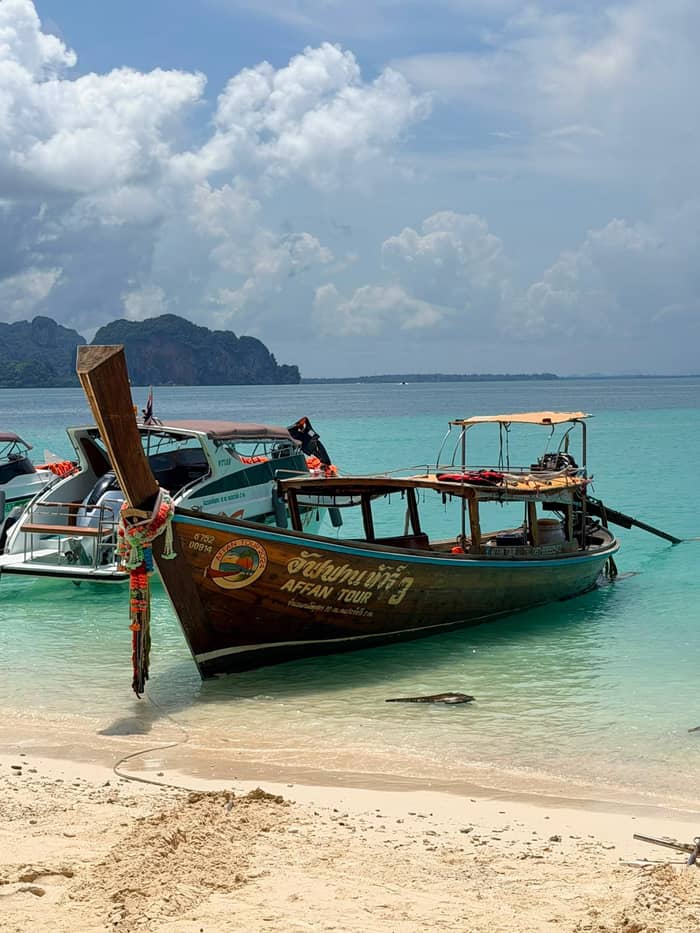
40 minutes at a rock
Lunch box
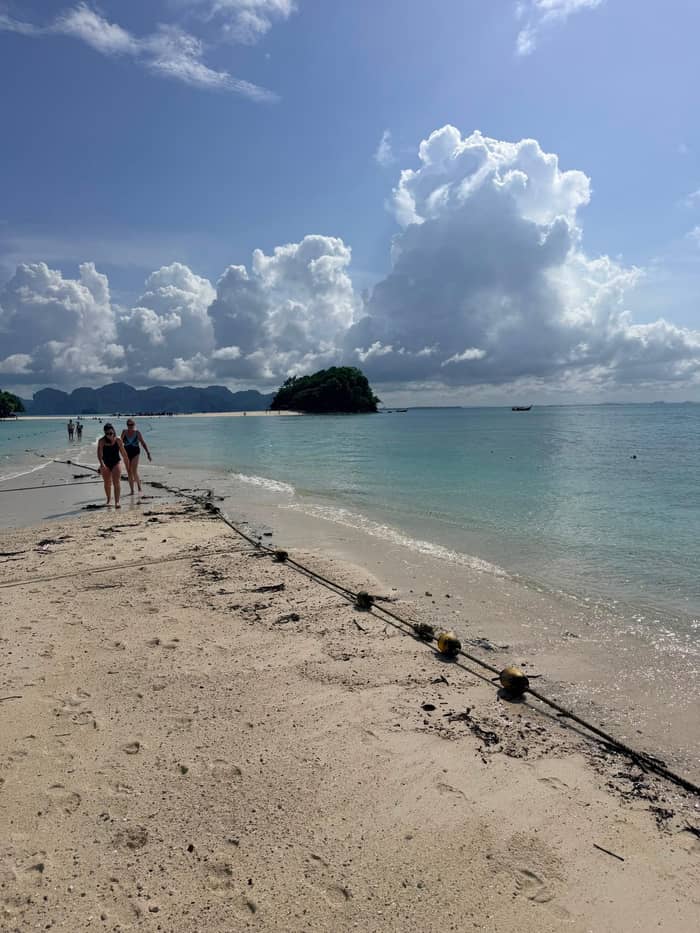
Most water time
Kayaks and boards
The search for snorkeling 4 islands tours by speedboat from Krabi turns up a choice between boat types, and the water does not care which one you ride. A speedboat product is a compact day: 5.5 hours, boat legs of 20 minutes at each end, and 40 minutes of snorkeling at Chicken Island, while the site's longtail day runs 6 hours and lists the same island. The speedboat saves time on the water; the longtail gives a slower, quieter ride.
What you pay for with a speedboat is more minutes at the stops and less time bouncing between them. What you give up is some comfort in a chop and the open feel of a longtail. If you get seasick, a slow boat can be kinder, and if you are short on time, a fast one fits. A listing that offers either boat type at one price lets you decide on the day, so read the title and the stop times together.
Compare like with like. A listing that includes a lunch box, one that includes a buffet and one that includes a dinner are different days, and the snorkeling time is only one line of the comparison. The table below lines up the minutes and the notes, which shows at a glance where the water time is longest for the money.
A snorkeling stop
Briefing
Supervisors brief on laws and responsible practice before the activity.8
Kit
Equipment is provided, and the vest stays on near coral.2
Entry
Enter from the ladder and stay on the surface until you are comfortable.
Swim
Keep your hands off coral and animals.7
Exit
The crew checks everyone is back before the next stop.
A life vest changes who can snorkel. With the vest worn at all times, as TAT reports for snorkeling near coral,2 a weak swimmer can float on the surface and look down. Ask the crew to check the fit and to stay close, hold the guide's hand if you feel unsure and stay in water where your feet can touch the bottom. There is no shame in watching from the boat, and the day does not depend on getting in.
Children need a small mask, a vest that fits and an adult within arm's reach. Sunset products set their own limits: one record bars children under 2, pregnant women and guests with a heart problem or another serious illness, so read the restrictions of the listing you plan to book and do not assume a rule from another. When in doubt, message the operator before you pay.
Comfort matters too. Salt water, sun and a long day tire people out, and a cold swimmer does not enjoy the reef. Wear a rash vest for sun and warmth, put on a reef-safe sun cream well before you get in, and drink water between swims. If you wear contact lenses, take a spare pair and a small dry towel, and keep your phone in a pouch you have tested over the sink.
Video
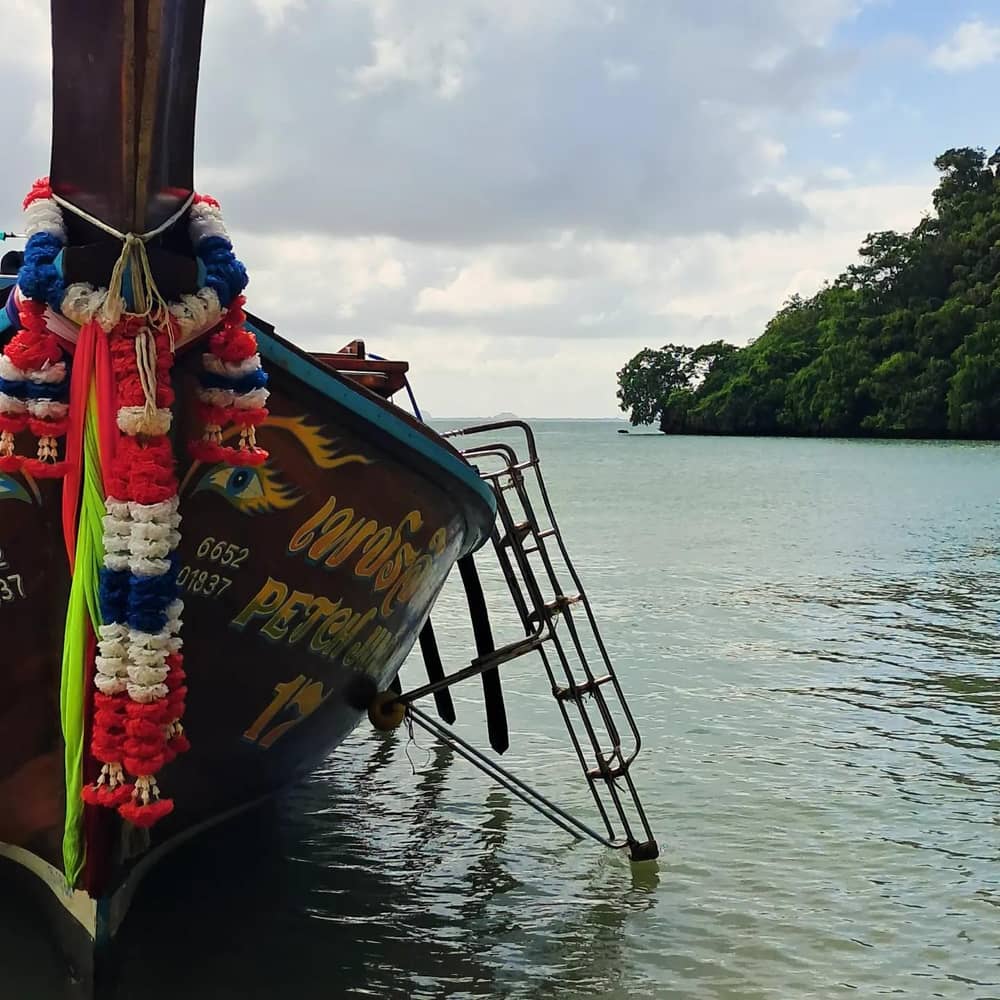
Her Endless Voyage on YouTube · The clip loads only after you tap play.
For snorkelling near coral reefs, tourists must be provided with life vests and wear them at all times, unless they hold a recognised freediving certificate
A snorkeler's most useful habit is restraint. TAT notes that a lack of awareness leads to harmful behavior such as stepping on coral, disturbing wildlife and underestimating hazards like rip currents,21 and it launched an e-learning project called Coral College on marine safety and responsible practice.22 TAT says Coral College is due to expand to Krabi in its next phase,23 which is a good sign for this coast.
The rules are short. Do not stand on coral, keep fins up and away from the bottom, do not touch anything alive and do not take anything away. TAT states that feeding fish, polluting reefs and handling starfish and other marine life are all strictly forbidden.7 Sun cream on the skin washes into the water, so apply it early and choose a gentle formula, and keep a floating distance of a few body lengths from the reef.
If the guide drops anchor, ask where the anchor chain lies and stay away from it. The park staffs a ranger post on Poda and has visitor desks at Thale Waek and Railay,24,25 so ask a ranger or your guide if you are unsure what is allowed. Be the swimmer other swimmers do not notice, and the reef will be the same on the next visit.
TAT's advice on stings is specific. Its view is that box jellyfish show up more often in the monsoon months,5 and the Krabi park waters appear among zones with occasional reports.26 A rash guard, lycra suit or sleeved top lowers the chance of a sting.17
If a sting happens, the national emergency hotline is 1669,6 and TAT recommends soaking the sting in vinegar for a minimum of 30 seconds.20 It warns against rubbing the wound and against rinsing it with fresh water.27 Tell the crew straight away. TAT adds that stonefish, weever fish and sea urchins are other hazards,28 and that even jellyfish stranded on a beach can sting.29
Currents and waves matter as well. TAT warns that large waves and rip currents can make swimming very dangerous in the monsoon, and that red flags mean do not swim.30,18 It advises asking lifeguards or hotel staff when in doubt,31 and staying out of the sea after downpours, after dark or beyond the buoys.19 On a boat tour the captain makes the call, so follow the crew when they say the water is closed.
FAQ
The record lists snorkeling at Chicken Island and says snorkeling equipment, fruit and water are provided.
Yes: a vest is required near coral reefs, with an exception for certified freedivers, as TAT reports.2
TAT lists feeding fish, polluting reefs and handling starfish and other marine life as strictly forbidden.7
Life vests are worn at all times near coral, but check the restrictions of the listing you book.2
Sources
Also worth reading
Planning the 4 Islands trip? Ask a real person here.